
Common Dog Skin Problems in Kathmandu: What Every Dog Owner Should Know About Healthy Skin
Every pet parent knows the joy of running their hands through a clean, soft, glossy coat. But as certified professional groomers working alongside veterinary teams here in the valley, we are seeing a worrying trend: dog skin problems are rising fast across Kathmandu.
From Boudha and Jorpati to Jhamsikhel, Baluwatar, and Maharajgunj, our city's urban environment is tough on dogs. Heavy dust, PM2.5 air pollution, seasonal grass pollen, and sharp humidity swings — especially during monsoon — have made skin and coat issues the number one complaint we hear from local pet owners.
The problem is that early warning signs are easy to miss. An occasional scratch looks harmless. But constant itching, dandruff patches, sudden hair loss, or a persistent "corn-chip" smell are distress signals from your dog's largest organ — their skin.
Our honest approach: Grooming alone cannot cure a medical skin condition, and we will never claim it can. Healthy skin needs two things working together — a veterinarian to diagnose and treat the underlying cause, and a professional groomer to maintain the skin's external defense: removing allergens, preventing bacterial buildup, and spotting problems early. Early detection saves your dog from chronic discomfort and saves you from expensive long-term treatment.
1. The Five Most Common Dog Skin Problems We See in Kathmandu
A. Constant Itching and Scratching (Pruritus)
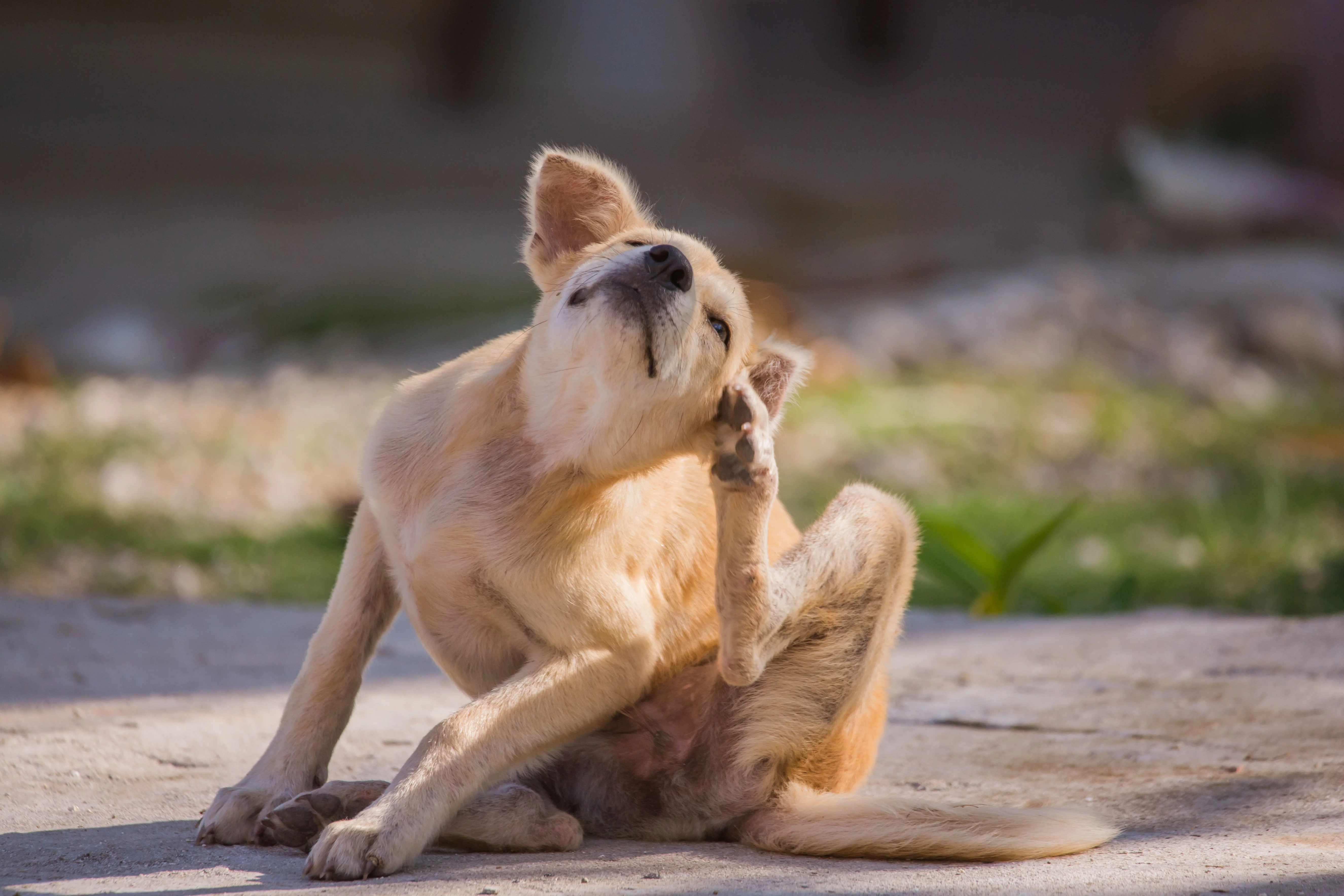
When a dog scratches, licks, or bites their skin non-stop, they are suffering from pruritus. It is not a disease itself — it is a symptom of an underlying irritation that needs attention.
The main triggers we see:
- Environmental & food allergies — dogs react to Kathmandu's airborne dust, vehicle exhaust particles, and mold spores just like we do. Food sensitivities often show up as itchy skin around the face, belly, and paws.
- Parasites — for dogs with Flea Allergy Dermatitis (FAD), even a single flea bite can set off intense itching across the whole body.
- Secondary infections — tiny cracks in dry skin let bacteria and yeast take hold, creating a vicious itch cycle.
- Wrong grooming products — cheap commercial soaps strip the skin's protective oil layer, leaving it raw and irritated.
How the damage escalates: Itch trigger → scratching and biting → skin barrier breaks → bacteria enter → serious infection.
Watch for: localized redness, raw patches, hair loss around the hindquarters, constant paw licking, and frequent head shaking (often a sign of a linked ear infection).
When to see the vet: If the skin feels hot to the touch, breaks out in fluid-filled bumps, or the itching stops your dog from sleeping or eating normally, book a veterinary checkup — do not wait.
How grooming helps: Regular washing with hypoallergenic, soap-free formulas flushes out trapped pollutants before they penetrate the skin. Our professional dog grooming serviceis designed to gently soothe irritated skin and provide cooling relief to inflamed areas.
B. Fleas and Ticks
Kathmandu's warm, increasingly humid climate lets fleas and ticks thrive almost year-round — especially in grassy residential areas, parks, and walking trails.
Why they are more dangerous than most owners realize:
- Flea Allergy Dermatitis (FAD): flea saliva contains highly allergenic proteins. In sensitive dogs it causes fierce itching, frantic biting, pus-filled skin infections, and hair loss.
- Tick Fever: ticks transmit Ehrlichia and Babesia parasites. A single attachment can cause high fever, lethargy, internal bleeding, and dangerous platelet drops — a life-threatening emergency.
- Anaemia: heavy infestations literally drain a dog's blood, causing weakness and pale gums. This is especially dangerous for puppies.
The honest solution — two parts, not one: For diagnosis and medical treatment, book a skin disease consultation at City Pet House & Animal Clinic, our partner veterinary clinic. For safe external removal, our tick and flea treatment uses veterinary-approved, non-toxic antiparasitic washes that eliminate adult parasites while calming the damaged skin. Then keep protection going year-round with vet-prescribed chewables or spot-on treatments — this last step is the one most owners skip, and the reason infestations keep coming back.
C. Hair Loss and Excessive Shedding
Finding dog hair on your sofa is normal. Bald patches are not. Here is how to tell the difference:
- Normal seasonal shedding — old undercoat falls out naturally to make room for a new coat suited to the changing season.
- Abnormal hair loss (alopecia) — irregular bald patches, symmetrical thinning along the flanks, broken hair shafts, or exposed skin with darkening and scaling. These need a vet's attention.
| Breed & coat factors | Nutrition gaps | Medical conditions |
|---|---|---|
| Double-coated breeds (Huskies, German Shepherds) trap dead hair, causing coat compaction that blocks airflow to the follicles. | Lack of Omega-3 and Omega-6 fatty acids weakens hair roots and the skin's defenses. | Bacterial folliculitis, ringworm, hypothyroidism, or hormonal shifts can shut down normal hair growth. |
Why deshedding matters: In heavy-coated breeds, dead undercoat must be mechanically removed. Left alone, it compacts against the skin, trapping moisture and oils — a perfect setup for infection. Our dog deshedding service uses professional undercoat rakes and high-velocity dryers to extract dead fur safely without damaging the topcoat. For young dogs, regular puppy grooming helps the adult coat grow in clean and healthy.
D. Dandruff and Dry Skin
Dry, flaky skin is one of the most common complaints we hear from Kathmandu pet owners — visible white flakes across the coat, often with a coarse, brittle hair texture.
The usual causes:
- Human shampoo or dish soap. This is the biggest one. Dog skin sits at a pH of roughly 6.5–7.5, while human skin is much more acidic at around 5.5. Human products completely disrupt a dog's protective acid mantle, causing dehydration, irritation, and cracking.
- Bathing too often without professional rehydrating conditioners, which strips away the natural sebum oils that lock in moisture.
- Kathmandu's dry, dusty winters, which rapidly pull moisture from the skin — made worse by improper drying after baths.
The fix: pH-balanced, soap-free formulas with colloidal oatmeal, aloe vera, and natural lipids. Our dog bathing service always includes a dedicated conditioning phase, followed by precision drying at calibrated warm temperatures — thorough, but never so hot that it dries out the skin further.
E. Skin Infections and Hot Spots
Once the skin barrier is broken by scratching or trapped moisture, micro-organisms multiply fast:
- Hot spots (acute moist dermatitis): a tiny scratch can turn into a raw, red, weeping, hairless lesion within hours. The classic trigger: a dense coat left damp after rain or a bath, creating a warm environment where Staphylococcus bacteria explode in number.
- Yeast dermatitis (Malassezia): yeast lives naturally on dog skin in small numbers, but trapped moisture in skin folds lets it grow out of control — causing greasy skin, intense itching, a distinct sour smell, and eventually thickened "elephant-like" skin around the neck, armpits, and paws.
2. Being Transparent: The Challenges We Face as Groomers
We believe pet owners deserve honesty about what happens on the grooming table. Professional grooming means managing a living, biological surface safely — and these are the real challenges we deal with:
1. Missing medical history. Without knowing a dog's past allergic reactions, shampoo sensitivities, or previous treatments, we risk triggering a flare-up. This is why our intake interview matters — please tell us everything, even things that seem minor.
2. Requests for cheap products. Owners sometimes ask us to use cheap commercial soaps or human shampoo to save money. We respectfully decline — every time. Sub-par products strip the skin barrier and cause the very itching and flaking owners then bring their dogs back for. It is not worth it.
3. The hidden danger of incomplete drying. A rushed dry that leaves the undercoat damp near the skin can cause hot spots or yeast infections within days — even though the dog looked perfectly fine leaving the salon. This is why we take drying seriously and never rush it.
4. Grooming dogs with active skin conditions. Standard slicker brushes can create micro-abrasions on already inflamed skin and spread bacteria. When we spot an active infection, we adjust our tools and technique — and we will honestly tell you when your dog needs a vet before they need a groomer.
3. Why Grooming and Veterinary Care Must Work Together
Let us be clear: grooming does not replace veterinary medicine. It is your dog's frontline defense and early-warning system. During a full grooming session, a trained groomer inspects nearly every centimeter of your dog's body — and often finds hidden ear infections, early parasite activity, or developing hot spots long before an owner would notice at home.
When we find something abnormal, we refer you for proper diagnostics — skin scrapings, fungal cultures, or blood tests. Once your vet prescribes a treatment plan, we help execute it: applying medicated baths with exact contact times and safe drying technique. For complete veterinary care, we recommend the clinical team at City Pet House & Animal Clinic. Between the clinic and the grooming table, your dog gets full-circle care — inside and out.
4. The Grooming Ghar Skin-Safety Checklist
Every dog that comes to us goes through the same strict protocol. This is exactly what we do — no shortcuts:
Before grooming
- Full dermatological scan — we inspect the coat down to the skin for redness, scaling, lesions, or hair loss.
- Parasite check — ears, armpits, and tail base examined for fleas, ticks, and lice.
- Client intake interview — skin history, known allergies, past shampoo reactions, and current medications.
- Custom care plan — shampoo, conditioner, and brush type chosen for your dog's breed and skin condition.
During grooming
- Sterilized tools — all blades, combs, and scissors pass through a medical-grade disinfection cycle.
- Lukewarm water only — calibrated to soothe, never aggravate, sensitive skin.
- 10-minute medicated contact time — therapeutic formulas stay on the skin long enough to actually work.
- Complete multi-zone drying — high-velocity drying of the full undercoat, with extra attention to the neck, tail, and groin.
After grooming
- Final barrier inspection — confirming no irritation occurred during the session.
- Findings report — we tell you about any patches, lumps, or ear irritation we discovered.
- Home-care guidance — practical advice on brushing and keeping the skin dry between visits.
- Honest vet referral — if we find anything needing medical treatment, we say so and point you to the clinic.
5. Frequently Asked Questions
Why is my dog scratching continuously?
Continuous scratching usually points to environmental allergies (dust, pollen), flea bites, dry skin, or a secondary bacterial or yeast infection. Because chronic scratching breaks the skin barrier and invites deeper infection, get a veterinary checkup and follow up with a soothing hypoallergenic bath at a professional salon.
How often should I groom my dog?
For most breeds, every 4 to 6 weeks. Long-coated and double-coated breeds (Shih Tzus, Poodles, Huskies) need regular sessions to prevent matting and undercoat compaction. Short-coated breeds benefit too — for shedding control and skin health checks.
Can grooming prevent skin problems in dogs?
Regular professional grooming is one of the best preventive tools available. Thorough washing removes trapped dust, pollution, and allergens; professional drying prevents the moisture buildup behind hot spots and yeast infections; and every session doubles as an early skin health check. But to be honest — grooming prevents and detects; it does not cure. Medical conditions still need a vet.
What shampoo is safe for dogs?
Only a high-quality, pH-balanced shampoo made specifically for dogs (roughly pH 6.5–7.5). Never human shampoo, dish soap, or cheap commercial cleaners — their acidity strips the dog's natural skin barrier and causes dryness, irritation, and flaking.
When should I take my dog to a vet for skin problems?
Immediately, if you notice skin that is hot to the touch, open sores, weeping lesions, fluid-filled bumps, patches of hair loss, or a strong foul odor — or if itching is so intense your dog cannot sleep or rest.
How can I prevent fleas and ticks in Nepal?
Combine year-round vet-prescribed preventatives (chewable tablets or spot-ons) with regular professional grooming. Keep your lawn trimmed and check your dog thoroughly after walks in grassy areas.
Worried about your dog's skin?
Book a grooming session with a full skin health check at Grooming Ghar, or schedule a veterinary skin consultation at City Pet House & Animal Clinic. Message us on WhatsApp or visit us in Kathmandu — early detection is the kindest thing you can do for your dog.